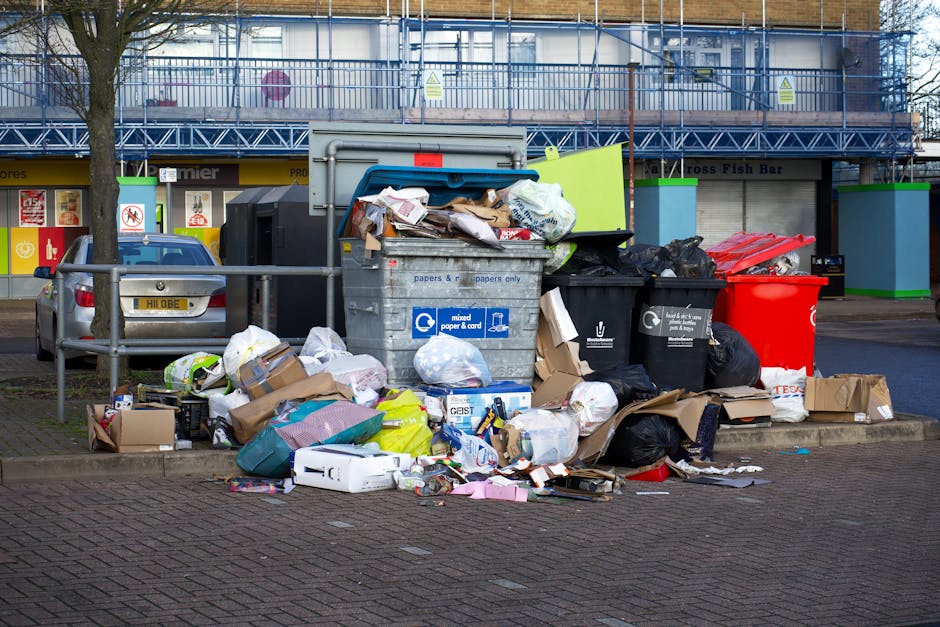
Chislehurst High Street guide to rubbish removal services

If you are trying to clear a shopfront, flat, office, or family home near Chislehurst High Street, rubbish has a habit of piling up at exactly the wrong time. One minute it is a single broken chair or a stack of boxes in the corner; the next, it is getting in the way of customers, neighbours, or your own weekend plans. This Chislehurst High Street guide to rubbish removal services explains what to expect, how the process works, and how to choose the right option without making the whole thing more stressful than it needs to be.
We will look at common service types, the practical differences between rubbish removal and skip hire, the issues people often miss, and the small decisions that save time and money. If you want a clear route from cluttered to sorted, you are in the right place.
- Why it matters
- How rubbish removal works
- Key benefits and practical advantages
- Who this is for and when it makes sense
- Step-by-step guidance
- Expert tips for better results
- Common mistakes to avoid
- Tools, resources and recommendations
- Law, compliance, standards, or best practice
- Options and comparison table
- Case study or real-world example
- Practical checklist
- Conclusion
- Frequently asked questions
Why Chislehurst High Street guide to rubbish removal services Matters
High streets are busy places. In and around Chislehurst High Street, waste can create problems faster than people expect: blocked access, odours, trip hazards, unhappy neighbours, and a general sense that the place has got away from you a bit. To be fair, that can happen to anyone. A delivery day runs late, a refit starts earlier than planned, or a garage clearance uncovers years of "I'll deal with that later" items.
Rubbish removal matters because it is not just about getting rid of junk. It is about keeping a property usable, safe, and presentable. For businesses, that can affect customer experience. For households, it can mean reclaiming a bedroom, loft, or garden without spending half your Saturday lifting awkward items into a car. For landlords and agents, it can help turn over a property cleanly between occupiers.
There is also a practical local angle. On a busy street, access and timing matter. If waste is left outside too long, rain, wind, traffic, and pedestrians can all turn a small problem into a messy one. A good removal plan keeps things moving, and that is the real point.
Expert summary: the best rubbish removal service is the one that matches the job size, the access on site, the type of waste, and the time you actually have available. Fast is great. Efficient is better. Safe and compliant is best of all.
How Chislehurst High Street guide to rubbish removal services Works
Most rubbish removal services follow a fairly simple flow, though the details vary depending on whether you are clearing a flat, an office, a garden, or building waste. Usually, you start with a description of what needs removing, then the provider estimates the load, access requirements, and collection method. In some cases you can book online through a straightforward service page such as book online, while more complex jobs may need a quote first via pricing and quotes.
For many customers, the collection itself is the simplest bit. The team arrives, checks the items, loads everything, and takes it away. That said, the planning before the van arrives is where the difference is made. Narrow access, stairs, parking constraints, fragile surfaces, mixed materials, and restricted waste types can all affect how the job is handled.
If you are dealing with household clutter or a move-out, a broader service such as house clearance or home clearance may fit better than a simple one-off pickup. For business premises, business waste removal or office clearance can be more appropriate, especially if there are desks, filing, packaging, or confidential materials involved.
The key thing is this: the more accurately you describe the waste, the smoother the collection tends to be. "A few bits and bobs" is not a category anyone enjoys pricing, and yes, it causes confusion every time.
Key Benefits and Practical Advantages
The obvious benefit is convenience, but there is more to it than that. Good rubbish removal saves time, reduces physical strain, and helps you avoid the false economy of trying to do everything yourself. If you have ever tried to get a sofa down a tight stairwell, you will know exactly what that means.
Here are the main advantages people notice quickly:
- Faster clearance: a professional team can often remove items in one visit rather than several car trips.
- Less disruption: well-planned removal keeps doors, paths, and work areas clearer.
- Better handling of awkward items: bulky furniture, appliances, and mixed loads are dealt with properly.
- Improved safety: fewer piles of waste means fewer slips, trips, and minor accidents.
- More responsible disposal: a proper service should sort items for reuse, recycling, or disposal where possible.
- Useful for time-sensitive jobs: end-of-tenancy clearances, pre-sale tidy-ups, and refurbishments often need quick turnaround.
For certain items, specialist handling is the safer choice. A fridge and appliance removal service is a good example because these items can be awkward, heavy, and not always suited to ordinary disposal routes. The same logic applies to sofas and mattresses, where access, size, and material type all matter. A dedicated mattress and sofa disposal option can save a lot of hassle.
And if the job includes paperwork or sensitive documents, a service like confidential shredding is a practical extra rather than a nice-to-have.
Who This Is For and When It Makes Sense
Rubbish removal is for more people than you might think. It is not only for major clear-outs or building sites. In fact, some of the most useful jobs are small and messy, the kind people keep putting off because they seem "not that big." Then the pile grows. Familiar story, right?
This service makes sense if you are:
- a homeowner clearing out a loft, garage, spare room, or garden
- a landlord preparing a property for new tenants
- a flat owner dealing with bulky items in a tight space
- a business owner needing office furniture or packaging removed
- a contractor with leftover rubble, timber, plasterboard, or mixed builder's waste
- someone managing bereavement, downsizing, or a long-overdue declutter
If you are unsure where your situation fits, look at the type of waste first. For example, old garden furniture and hedge cuttings may suit a garden clearance. Boxes of clutter and stored household items may be better handled through garage clearance or loft clearance. Broken chairs, wardrobes, or side tables often fall under furniture disposal or furniture clearance.
For businesses, timing can be everything. Nobody wants waste removal arriving during a lunchtime rush, with customers stepping around sack after sack. Choose a slot that works with your footfall, access, and staffing, not just the cheapest one.
Step-by-Step Guidance
If you want the process to go smoothly, a little prep goes a long way. Here is a sensible way to approach it.
- Identify the waste type. Separate general rubbish, bulky items, electricals, garden waste, builders waste, and anything potentially hazardous.
- Estimate the volume. Think in practical terms: a few bags, a van load, or a larger mixed clearance. If you are uncertain, photos help.
- Check access. Note stairs, parking, narrow hallways, loading restrictions, and whether the team will need to carry items from the rear of the property.
- Group items logically. Put similar waste together where possible. This helps speed up loading and can reduce confusion on the day.
- Ask about special items. Fridges, mattresses, sofas, paint tins, and other awkward materials may need different handling.
- Choose your service level. Do you need a full clearance, one-off removal, or a more targeted collection?
- Confirm the booking details. Check the arrival window, payment method, and any conditions relating to the site.
- Prepare the space. Clear a path to the items and protect floors if the area is delicate or freshly decorated.
- Be on hand if possible. Even if the team is doing the lifting, someone who knows what stays and what goes can prevent mistakes.
- Review the outcome. Before the team leaves, do a quick walk-through. It takes two minutes and avoids the annoying "oh, that lamp was supposed to stay" moment.
For larger internal projects, it can help to compare a few service types. If you are clearing a home from top to bottom, house clearance may be the most complete route. If you are focused on a rental flat or smaller property, flat clearance may be more efficient.
Expert Tips for Better Results
Small decisions make a big difference here. The best jobs are often the ones where the customer has spent ten minutes planning before the van arrives. That sounds almost too simple, but it really does help.
- Take clear photos from multiple angles. It gives a more realistic view than a single wide shot.
- Separate hazardous or restricted items early. Do not leave them mixed into general rubbish.
- Measure awkward furniture. A bulky wardrobe might be fine in a house but impossible through one tight landing turn.
- Ask how recycling is handled. A responsible provider should be able to explain their approach in plain English.
- Choose a timing window that suits the street. Early morning may be easier for access; late afternoon may be easier if you need staff on site.
- Keep documentation if needed. If you are a business, you may need records for internal reporting or waste management processes.
For builders and trades, builders waste clearance is often the better fit than general rubbish removal. The reason is simple: rubble, offcuts, plasterboard, and packaging need quicker sorting and a more practical approach than household clutter.
And if you are running an office, it is worth thinking beyond desks and chairs. Box files, old monitors, storage cupboards, and sensitive paperwork can all create a surprising amount of waste. That is where office clearance becomes useful, especially during a relocation or refurb.
Common Mistakes to Avoid
The biggest mistake is underestimating the job. A couple of bags becomes two dozen. A broken wardrobe becomes a dismantling task. A "simple pickup" turns into a half-day clean-up because everything was left in separate corners. Happens all the time.
Other common issues include:
- Mixing waste types together without checking what the service can take
- Forgetting access constraints such as parking, stairs, or locked gates
- Leaving the booking too late when you have a deadline such as a move-out or handover
- Not confirming what is included in the quote or service scope
- Ignoring specialist disposal needs for appliances, mattresses, or potentially hazardous items
- Trying to save money by doing unsafe lifting yourself and then regretting it for the next three days
Another one people miss: not checking whether the service is appropriate for the item. For example, old paint, chemicals, or similar materials may need hazardous waste disposal rather than a standard clearance. If in doubt, ask before you book. It is much easier than dealing with a rejected load later.
Also, do not assume every item in a garden or garage can be treated as ordinary waste. A bit of pre-sorting saves time and avoids awkward conversations on the driveway. Nobody wants those.
Tools, Resources and Recommendations
You do not need specialist gear to prepare for rubbish removal, but a few simple tools make the process smoother.
- Phone camera: take photos of the waste, access points, and any tight corners.
- Measuring tape: useful for bulky items and stairwell checks.
- Marker pen and labels: helpful if you are separating keep, remove, recycle, and donate piles.
- Heavy-duty gloves: sensible if you are moving sharp or dirty items before collection.
- Dust sheets or cardboard: protect floors and door thresholds during loading.
For people who want a quick overview of what can be loaded into a skip or mixed with other waste, what can go in a skip is a useful reference point, even if you decide a skip is not the best option for your property. It helps you think about material types and what usually needs separate handling.
If sustainability matters to you - and for most people it does now, quite rightly - ask about recycling practices and item sorting. A service with a clear approach to recycling and sustainability is usually a better long-term choice than one that just talks about speed.
For straightforward everyday needs, the main recommendation is this: choose the simplest service that genuinely fits the job. Not the fanciest. Not the biggest. The one that removes your waste with the least friction.
Law, Compliance, Standards, or Best Practice
Waste removal in the UK sits within a framework of legal duties, safety expectations, and good operating practice. You do not need to be a legal expert to book a collection, but it does help to understand the basics.
First, waste should be handled by a provider that operates responsibly and can dispose of materials through appropriate routes. That matters for environmental reasons and to reduce the risk of fly-tipping or poor sorting. If you are a business, you also have a stronger record-keeping burden than a typical one-off household clearance.
Second, some materials need special care. Electrical appliances, certain liquids, sharp waste, and anything potentially contaminated should not be treated casually. That is where specialist services and clear communication matter. In practice, the best operators build their service around safety first, then speed.
Third, insurance and site safety are worth checking. If a team is moving large or awkward items around your property, you want confidence that they work carefully and know what they are doing. A proper insurance and safety approach should be part of the conversation, not an afterthought.
For businesses in particular, internal policies also matter. If you are clearing an office, warehouse corner, or retail stockroom, it can help to understand the provider's health and safety policy and how they handle site-specific risks. The best providers are usually happy to explain this clearly, without making it sound like a lecture.
And if the clearance touches company records or personal documents, don't forget data protection concerns. Confidential shredding is not overkill in those situations; it is just sensible.
Options, Methods, or Comparison Table
People often compare rubbish removal with skip hire, or general clearance with specialist collection. The right option depends on access, waste type, and how much sorting you want to do yourself. Here is a simple comparison to make the choice easier.
| Option | Best for | Main advantage | Potential drawback |
|---|---|---|---|
| Rubbish removal service | Bulky items, mixed loads, quick clearances | Fast, convenient, little lifting for you | Less useful if you want to fill waste gradually |
| Skip hire | Longer projects, DIY waste, ongoing work | Good for staged filling over time | Needs space and may require permits or access planning |
| Specialist clearance | Furniture, appliances, offices, houses, garages | Tailored handling for the item type | May be more specific than a general service |
| Self-removal | Small loads and easy-to-carry items | Can feel cheaper at first glance | Time-consuming, physically tiring, and easy to misjudge |
For many high street properties, a removal service is the cleanest fit because it reduces disruption. If you are in a flat or above-ground property, the time saved on carrying and loading can be enormous. For businesses, that matters even more because downtime is expensive, even when it is just a few quiet hours.
Case Study or Real-World Example
Here is a realistic scenario. A small independent shop near Chislehurst High Street is preparing for a refit before reopening on a Friday. The back room has broken display units, packaging, a few old shelves, and several bags of general clutter that have built up over a year. Nothing dramatic, just enough to make the space feel tight and slightly grimy. You know the kind.
The owner first separates what will be reused from what must go. They photograph the load, note that access is via a rear door and a narrow passage, and identify one old fridge in the corner that needs separate handling. Rather than booking a generic collection and hoping for the best, they arrange a clearance that suits the mix of waste and the timeframe.
On the day, the team removes the bulky items first, then the lighter mixed waste, and finally the appliance through the safer route. The back room is clear by lunchtime, and the shop can move on to painting and fit-out without waste sitting around for another week. Simple, but effective.
The same approach works for homes too. A family clearing a loft before selling their house may think they need "just a bit of rubbish taken away." Once they sort it properly, they often discover old furniture, a broken exercise bike, three boxes of books, and the remains of a Christmas tree stand from who knows when. It happens. The good news is that a clear plan turns a stressful Saturday into something manageable.
Practical Checklist
Use this checklist before booking your collection. It is small, but it saves a lot of back-and-forth.
- Know what needs removing and what must stay
- Separate hazardous items from general waste
- Take photos of the waste and access points
- Measure bulky items if space is tight
- Check parking and access at the property
- Decide whether you need furniture, appliance, office, garden, or builders clearance
- Confirm the booking time and who will be present
- Ask about recycling and responsible disposal
- Review the quote so you understand what is included
- Clear a route for safe lifting and loading
- Keep paperwork if you need records for business or letting purposes
If you are unsure where to start, a good first move is simply to look at the waste honestly and decide whether it is household clutter, office waste, furniture, or something more specialist. That one decision does a lot of the heavy lifting before anyone else even arrives.
Conclusion
The best rubbish removal solution is not always the biggest or the fastest. It is the one that fits your space, your waste type, your deadline, and your tolerance for hassle. Around Chislehurst High Street, that usually means choosing a service that understands access, timing, and the reality of mixed waste rather than offering a one-size-fits-all promise.
Whether you are clearing a home, preparing a rental, emptying a garage, or sorting out a business premises, a calm and methodical approach will almost always give the best result. Think in terms of what needs removing, what needs special handling, and what can be recycled or reused. Keep it practical. Keep it safe. And do not leave it until the pile has a personality of its own.
Get a free quote today and see how much you can save.
If you want to learn more about the company behind these services, you can also visit the about us page or review the terms and conditions before booking. When you are ready, it is often a relief to just get it done, and breathe again afterwards.
Frequently Asked Questions
What does rubbish removal usually include?
It usually covers the collection and disposal of general waste, bulky household items, furniture, light commercial waste, and sometimes specialist items depending on the provider. The exact scope depends on the booking and the type of clearance you need.
Is rubbish removal better than skip hire for a high street property?
Often yes, especially where parking is limited, access is awkward, or you want the waste taken away quickly. Skip hire can work well for longer projects, but a removal service is usually easier when you need less disruption.
How do I know if I need furniture clearance or general waste removal?
If most of the load is sofas, chairs, tables, wardrobes, or similar items, furniture-specific clearance is usually the better fit. If it is mixed rubbish, packaging, household clutter, or small broken items, general waste removal may be enough.
Can you remove appliances like fridges and freezers?
Yes, but they often need separate handling. Appliances can be heavy, awkward, and subject to different disposal processes, so a dedicated appliance collection is usually the safest option.
What should I do with old paint, chemicals, or similar items?
Do not mix them into general waste. These items may need hazardous waste handling, so ask the provider before booking to make sure they can be taken safely and appropriately.
How much preparation should I do before the team arrives?
Enough to make access easy and to identify what is going. Taking photos, separating waste types, clearing a path, and checking parking usually makes the job much smoother.
Do businesses need a different type of clearance from households?
Sometimes, yes. Businesses often need faster turnaround, better record-keeping, and more careful handling of office furniture, documents, and mixed commercial waste. A business-specific service is often the better route.
Can rubbish removal help with a house clearance after a move or bereavement?
Yes. House clearance is commonly used for moves, downsizing, inherited properties, and situations where a full or partial property clear-out is needed with care and efficiency.
What happens if my waste is mixed with items that need special handling?
The provider may separate the load, charge differently, or ask you to identify restricted items in advance. This is why it helps to be clear about everything from the start rather than leaving surprises on the day.
How do I choose a trustworthy rubbish removal provider?
Look for clear pricing, sensible communication, safety awareness, and a practical explanation of how the waste will be handled. Trustworthy providers are usually straightforward about what they can and cannot take.
Is recycling important in rubbish removal?
Yes, very. A responsible service should sort items where possible and try to divert suitable materials from disposal. If sustainability matters to you, ask how the provider approaches recycling and reuse.
What is the best next step if I have a cluttered garage or loft?
Start by sorting the items into keep, donate, recycle, and remove piles. Then decide whether it is a garage clearance, loft clearance, or a more general home clearance. Once that is clear, getting a quote is much easier.